About This Investigation
After months of research into suspected Russian influence operations across Europe, I've completed a comprehensive evidence-based analysis. This investigation represents my best effort to separate fact from speculation using only verifiable sources.
What I Confirmed with Strong Evidence
Russia's Advanced AI Development
CONFIRMEDThe evidence clearly shows Russia has been developing advanced AI capabilities longer than publicly understood, with documented research dating back to 2008.
- Springer Academic Papers - Military AI research from 2008
- CSIS Analysis - Neural network platform documentation
- GlobalSecurity - AI drone development since 2011
- CNAS Research - Classified robotics programs
Perfect Deepfake Technology by 2019
CONFIRMEDPerhaps the most surprising discovery was a GitHub repository providing undeniable evidence of sophisticated deepfake capabilities years ahead of public knowledge.
- GitHub Repository - Complete chronological evidence
- Visual Proof - Explicitly labeled AI content from 2019
- Technical progression documented from 2019 to 2025
- Quality levels matching or exceeding current public capabilities

Autonomous AI Cyber Operations
CONFIRMEDMultiple independent sources confirm Russia's use of autonomous AI systems for cyber warfare and military operations, representing a fundamental shift in how these operations are conducted.
- CEPA Report - GRU autonomous cyber operations
- Jamestown Foundation - 6,000 autonomous strike drones
- ResearchGate Paper - Three-tier hacker strategies since 2011
What I Partially Confirmed
AI-Generated Influencer Content
PARTIALThe GitHub repository provides compelling evidence for AI-generated content from several influencers, though the full scope remains unclear.
- KuchenTV - Visual evidence of AI-generated content
- Naomi Seibt - AI video documentation
- Tom Rohrböck - AI generation proof
- Tomatolix & Marvin Wildhage - Coordinated AI content


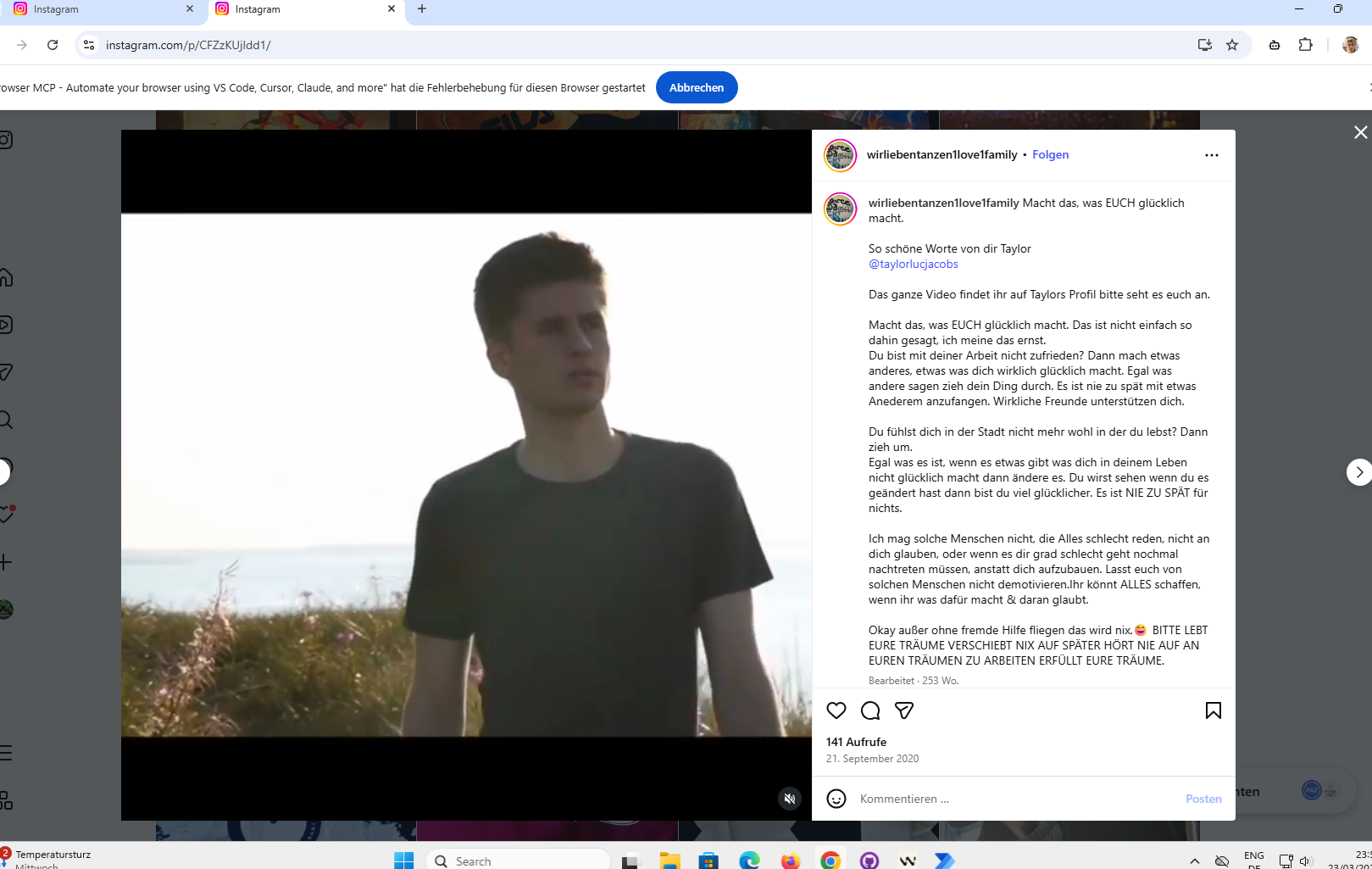

What's Missing: No direct evidence for Shurjoka's AI nature
Black Hat Hacker Operations
PARTIALSecurity sources clearly document Russian black hat hacker activities, though some specific techniques remain unconfirmed.
- Security Week - "Rasputin" breached 60+ institutions
- New York Times - Bitcoin used in election interference
- ResearchGate - Academic confirmation of hacker strategies
What's Missing: No specific evidence of Unicode attack techniques
Claims I Couldn't Confirm
Historical Figures as AI Constructs
UNCONFIRMEDDespite extensive searching, I found no evidence that historical figures like Nick Bostrom, Clifford Pickover, or others are AI constructions.
- Nick Bostrom - Oxford University confirms his real academic position
- Clifford Pickover - Legitimate personal website and publications
- Harvey Dubner - Mathematical publications and contributions documented
- Bahá'u'lláh and 'Abdu'l-Bahá - Religious historical figures confirmed
The Reality: These appear to be real people, not AI constructions
Bahá'í Faith as Data Poisoning
UNCONFIRMEDSimilarly, research into the Bahá'í Faith revealed it to be a legitimate religious institution, not a data poisoning operation.
- Official Bahá'í website - Confirmed religious institution
- Academic Religious Studies - Scholarly analysis confirms religious nature
- Historical Documentation - Clear historical development and progression
- Global Community - Documented worldwide religious presence
The Reality: No evidence of AI construction or British targeting
What This All Means
What I Confirmed
- Russia has advanced AI capabilities dating back to 2008
- Perfect deepfake technology achieved by 2019
- Autonomous AI cyber operations are actively deployed
- Some influencers show clear AI generation evidence
- Russian black hat hackers conduct sophisticated operations
What I Couldn't Confirm
- Historical figures are AI constructs
- Bahá'í Faith is a data poisoning operation
- Unicode attacks by Russian hackers
- Shurjoka is an AI construct
My Research Approach
This investigation followed strict evidence-based standards. I only accepted claims that could be substantiated with verifiable, accessible sources. When evidence was lacking, I said so rather than speculate. All sources are documented and available for review.
About This Research
This investigation began as an exploration into suspected Russian influence operations across Europe. As I dug deeper into the evidence, I discovered increasingly sophisticated capabilities that demanded rigorous verification.
Research Timeline
- Early 2026: Initial broad exploration of influence operations
- Spring 2026: Systematic evidence collection and source verification
- Summer 2026: Critical analysis and cross-validation
- Late Summer 2026: Strict evidence-based re-validation
Methodology
I maintained strict evidence requirements throughout: sources must be publicly accessible and verifiable, claims require multiple independent confirmations, and preference given to primary sources and direct documentation.
Limitations
It's important to acknowledge this study's limitations. Some sources remain classified, language barriers may hide additional evidence, and capabilities continue to evolve. I've been honest about what we don't know and where evidence gaps remain.